
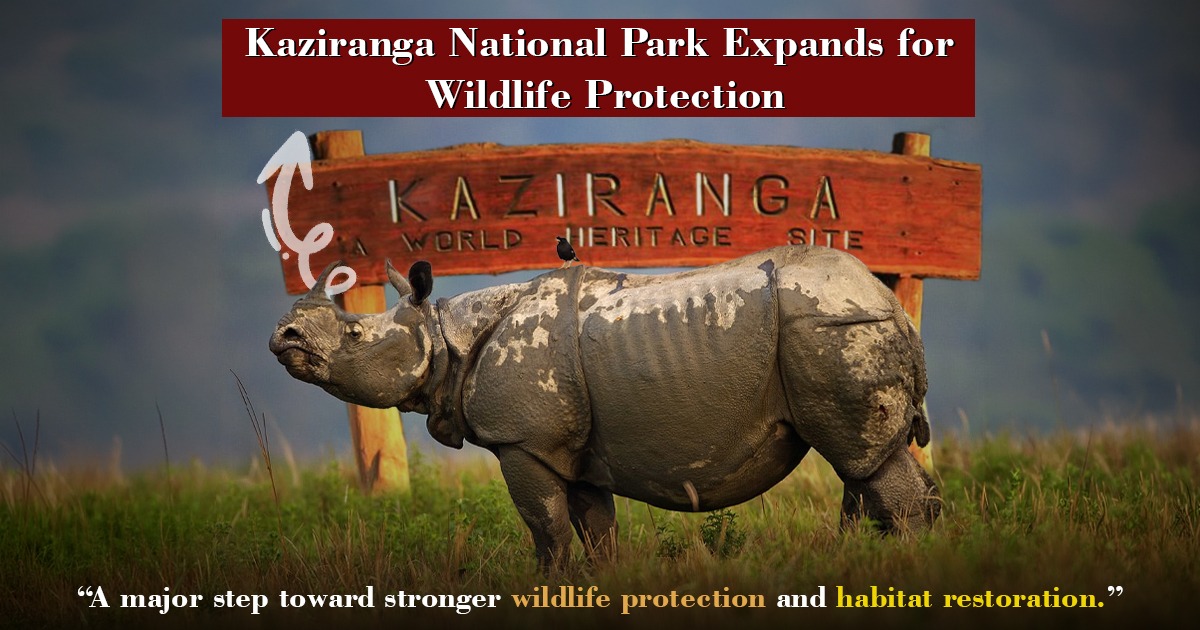
Kaziranga National Park Expands For Wildlife Protection
One of the most significant wildlife parks in India, Kaziranga National Park, is located in the state of Assam. Particularly noted for its wildlife, including Bengal tigers and the rare one-horned rhinoceros, it is a UNESCO World Heritage Site and is also a destination for which every year, a lot of people make Kaziranga safari bookings. With meadows, water areas, and woodlands, the park offers a natural habitat for several species of animals, birds, and plants.
The Assam government has given approval to a plan to increase the land of Kaziranga National Park by around 3,000 hectares (approx.) recently. This increase in land will enhance this national park's ability to safeguard its species and their natural surroundings. The growth results from dangers like human-wildlife conflict and habitat degradation, hence supporting the park's ability to protect its wildlife.
What Is the New Land for?
More room for the animals residing in Kaziranga will be provided by the 3,000 hectares of additional land. This additional space will let them move around in the park more safely and freely. This new land is particularly vital for species like tigers, elephants, and rhinos, whose habitats need large areas for survival, finding food, and territory establishment. The growth will also help to solve the issue of the reduction in natural areas because of nearby human settlements.
The areas formerly impacted by illegal human settlements will provide the new land. These communities impacted the ecological balance of the park. But now, these regions have been cleared, and animals will be free to go back here. Making it a safer habitat for the animals, the government will bring the land back to its natural state.
Additionally, helping to lessen human-animal conflict will be achieved with this move. Animals sometimes stray into neighboring settlements seeking food or shelter when they lose their environment. For humans and animals both, this might cause dangerous circumstances. The government hopes to lessen these situations and retain the wildlife inside the protected area of the park by extending Kaziranga's borders.
Breakdown of the New Land Areas
The new 3,000 hectares of land will be divided into three areas, each playing a role in protecting wildlife:
- 176 hectares in Nagaon district (Deosur and Palkhowa): This area is in the middle of Kaziranga, close to the park's existing borders. It will create corridors for wildlife movement, allowing animals to travel between different parts of the park that were previously isolated.
- 307 hectares in Nagaon district (Banderdubi): Located to the south, this area will provide more grasslands for herbivores like the one-horned rhino to graze. It will also be important for the park’s tigers, giving them space to establish their territories.
- 2,570 hectares in Sonitpur district (Mokua Chapori): This is the largest part of the new land and is located to the east of the park. Mokua Chapori has river islands called sapori, which are important for the park's aquatic species. This area will help maintain the park’s biodiversity by providing space for both land and water animals.
Together, these areas will help connect habitats, creating stronger corridors for animals to live in. The expansion will also give them more space to thrive, helping Kaziranga protect its wide variety of species.
Why Is This Important for Wildlife?
The new land is important for many reasons. Large animals like tigers and rhinos need a lot of space to survive and reproduce. Expanding Kaziranga National Park will give them the room they need to roam, hunt, and find mates. For tigers, who are territorial and prefer large areas, the expansion will help them establish bigger territories, which is essential for keeping healthy tiger populations.
In addition to helping these animals in the short term, the expansion is also important for the park’s long-term health. When animals are isolated in smaller habitats, they may face problems like inbreeding and reduced genetic diversity. The new land will help reduce these risks by providing more space for animals to live and move. This will allow wildlife to continue to thrive in the park for many years.
The expansion will also help reduce human-animal conflict. As wildlife habitats shrink, animals often enter nearby villages in search of food. This can lead to dangerous interactions. By increasing the park’s size, Kaziranga can keep wildlife in protected areas, reducing the chances of conflict with humans.
Solutions to Flooding in Kaziranga
Flooding is a major problem in Kaziranga National Park, especially during the monsoon season. The park is in a low-lying area, and many parts of it get flooded during heavy rains. This floods the animals’ habitats, and many animals get trapped or are forced into unsafe situations. To solve this problem, the government plans to build a large artificial highland in the park.
This highland will cover 32 kilometers and will give animals a dry place to go during floods. The new highland will help reduce the stress caused by flooding, allowing animals to stay safe while waiting for the waters to go down. Currently, there are 20 kilometers of natural highlands and 144 artificial highlands, but this is not enough. The new highland will give animals more places to go and protect them from floodwaters during the monsoon season.
Concerns About Artificial Highlands
Some environmentalists are concerned about the effects of the new artificial highlands, even if they will be useful during floods. Artificial highlands may modify the natural floodplain ecosystem, according to some people. Many species of plants and animals depend on floodplains; therefore, the flow of water in the area could be impacted by the construction of tall structures such as artificial highlands.
Artificial highlands might assist temporarily, but some people worry they might change the ecosystem permanently. Monitoring these uplands carefully is really essential, and making adjustments is required to preserve the park's natural surroundings.
Still, the necessity for flood control is clear despite these worries. Significant measures to safeguard the park's wildlife from both natural and man-made threats help in the development of Kaziranga National Park and the new highland regions.
(0) Comments: