
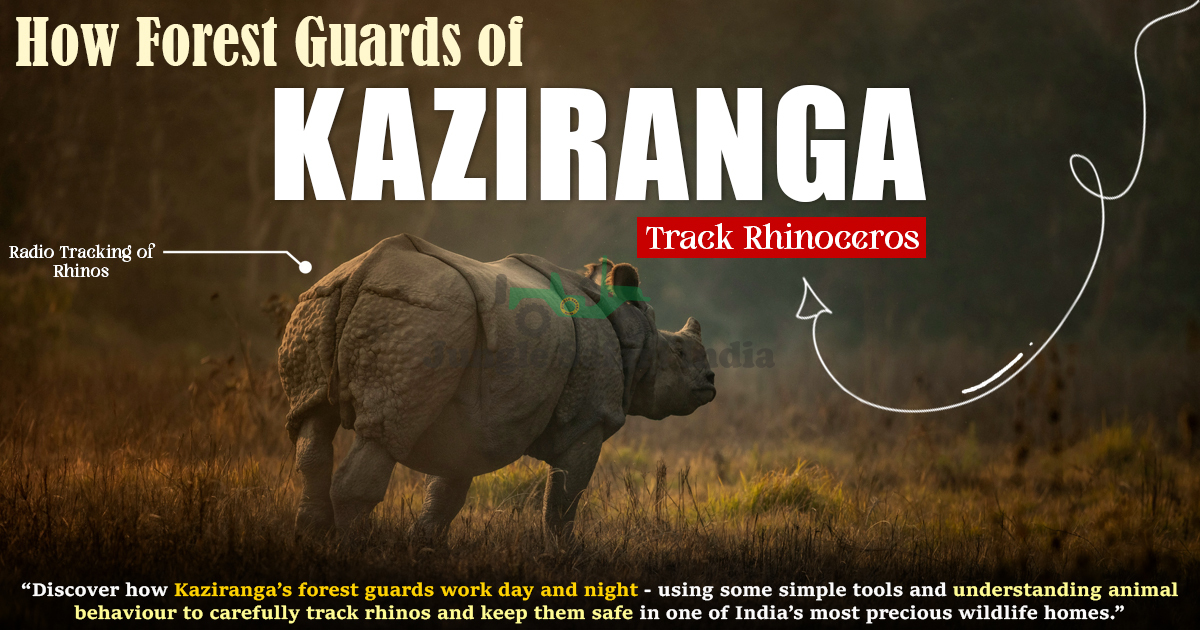
How Forest Guards of Kaziranga Track Rhinos
Kaziranga National Park is famous all over the world for its one-horned rhinoceros. But many people wonder how the forest guards of this spot track so many rhinos inside such a huge forest. So, Kaziranga is filled with tall grass, deep swamps, muddy tracks, wetlands, and thick areas of Jungle. Inside the park, the Rhinos move freely as they like - because it is their home. They walk here and there inside the park and even sometimes hide inside the grasslands. They enjoy swimming in the water and even enter the nearby village areas during floods.
Still, the park has forest guards who know exactly where a rhino went, how long ago they went somewhere, and what direction they took. Now, you might be thinking how the forest guards know this much about Rhinos. So, let me tell you that the forest guards of Kaziranga National Park read the forest like a book. They do a lot of things to read the park, and they are trained to understand the signs that Rhinos leave behind. Let’s know how the Forest guards of Kaziranga track Rhinos.
1. Forest Guards Track Footprints
The forest guards of the Kaziranga National Park track the footprints of the Rhinos. This is one of the easiest and clearest signs of a rhino. The footprints of rhinos are large, wide and look like a round pad with three toes. When the guard sees these prints, they immediately say, “A rhino passed from here.” Many tourists who come for a Kaziranga safari see these footprints, and some of them even take photographs during the ride.
The guards look at the toes of the footprints to see which way the rhino is walking. They even see the size of the footprint to see if it was an adult rhino or a calf. The deep footprints mean that Rhino was running, and the light one means that it was walking slowly. Even the forest guards also see the edges of footprints, which says that if it is sharp, then it is fresh, or if the footprint is dry or dusty, then it is old. These are the things that forest guards learn about during their training.
Kaziranga is famous for its tall elephant grass. This grass can grow taller than a human or even an elephant. Inside this grass, you cannot see anything, even if the animal is just 10 feet away. Footprints in the mud help guards know where the Rhinos went, especially during the early moning. Some guards are so experienced that they can even tell which rhino it is by the shape and walking style of its footprints.
2. Forest Guards See the Dung
It may sound funny, but rhino dung (poop) is one of the best clues in the forest. Rhinos use dung to mark their territory, just like tigers do. Rhinos often poop in the same place again and again. This place is called a middens. These dung piles work like a message and state that “This area is mine”. Other rhinos can smell it to know which rhinos live nearby.
On the other hand, forest guards see the dung to know if a Rhino was here and how much time ago. If the dung is very fresh, guards stay alert because the rhino may be standing somewhere close in the grass. By watching it, the guards can even understand which grass or plants the rhino is feeding on.
The forest guards of Kaziranga National Park are trained to read dung like a storybook. They can even guess whether it is from - a male or female rhino based on the pattern and location. During monsoon floods, dung gets washed away, so fresh dung becomes an important clue to know where rhinos have moved.
3. Trails Made Naturally by Rhinoceros
In the Kaziranga National Park, the rhinos make their own paths. Rhinos move through the forest using small paths, and they are known as the trails. Rhinos don’t make these trails on purpose, but once they walk through an area many times, a route gets created naturally.
For the guards, this park is like their own home. They know which trails are most preferred by Rhinos and where their trails lead, like water bodies, grassland, or the hillsides. The guards also know which trails are more used during the monsoon, summer, or winter season. The Rhinos inside Kazirnafa walk from a grassland to water, then to a shaded area to rest. Their trails show this pattern.
When guards walk on the same path, they notice the broken grass, mud pushed aside, fresh footprints, and the dung of rhinos. They even see the scratch marks on trees and notice the smell left by rhinos. These things help the guards to know when a Rhino passes through this area.
4. Radio Tracking of Rhinos
The forest guards of Kaziranga National Park not only depend on the natural signs. They also used the latest technology to track the movement of Rhinos. Some Rhinos of the Kaziranga National Park wear a radio collar. This is a special device that is placed around the neck of the Rhinoceros. This collar sends signals to the receiver (forest guards) and scientists.
The signals help the forest guards and ppark authorities to know where the Rhino is, how fast it is moving, and whether it is staying in one place too long. The Radio collars are very helpful as they can track the Rhinos when they move to higher places. It also allows the forest guard to see if any rhino is stuck or going too near a village. If a Rhino enters a risky area, then the collar sends the alert. Guards rush to those areas to protect the rhinos from poaching. The Radio collar even helps the guards to check if a Rhino is moving or not. If it’s not moving much, then the Rhino might be sick or injured.
The Kaziranga National Park is home to around 2,613 Rhinos, and it’s impossible to put collars on all of them. Collars are mostly used for Rhinos, which are newly relocated to spots, are under scientific study, or are living near sensitive areas. But even without technology, guards track the rest using natural signs.
Final Thoughts
Kaziranga National Park is a natural spot for rhinos, and here they walk freely. This park offers them a natural home and also protects them from hunting, poaching, etc. The forest guards of the park track Rhinos, but without disturbing them. The tracking methods like footprints, dung, trails, and radio tracking, show how nature and technology can work together to protect a species. Whenever you go for a Kaziranga safari, and you spot a Rhino, remember that someone spent many hours following clues in the forest just to keep that rhino safe.
(0) Comments: