
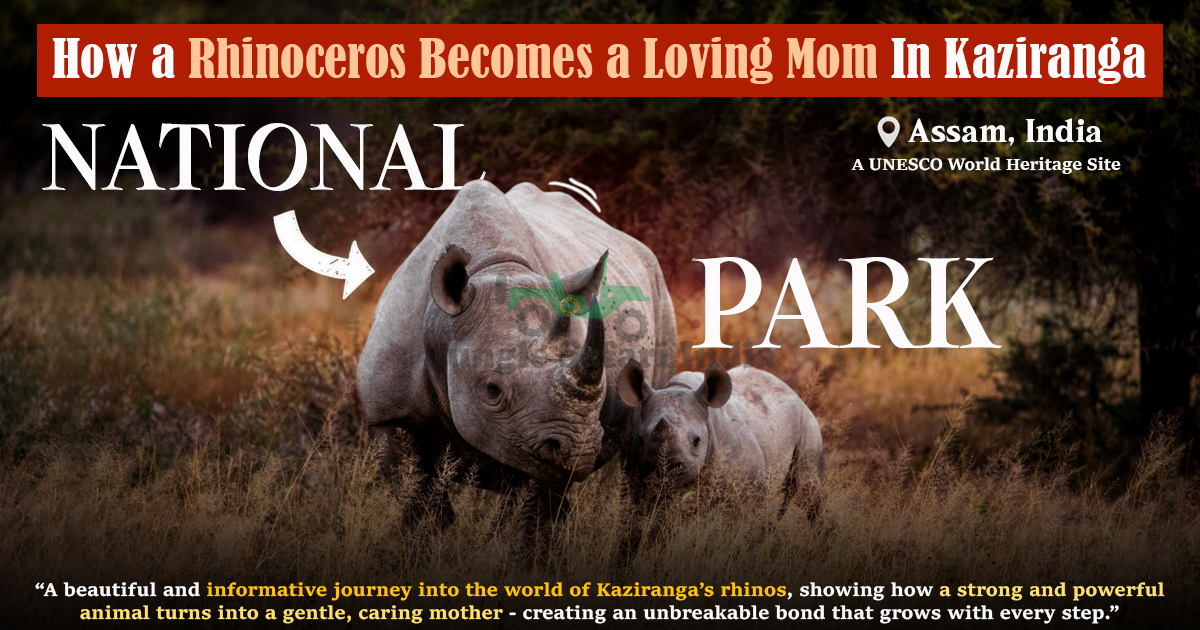
How a Rhino Becomes a Loving Mom in Kaziranga
Most of the people come for a safari in Kaziranga to enjoy sightings of Rhinos. This park is famous all over the World for the mighty rhinoceros. These animals look huge, tough, and almost ready to fight with anything. But behind the strong look of Rhinos, there is a cute animal that has a loving heart - especially when a female rhino becomes a mother. The Rhino mother loves her baby more than anything else in the World. In Kaziranga National Park, this side of the one-horned rhino is rarely seen by tourists because it happens in the deeper areas of the park, where the crowd is less. Let’s know the softer side of Rhino - how a rhino becomes a mother, what happens during pregnancy, and how she protects her newborn from the forest dangers.
Rhino Pregnancy and Journey Before Birth
Rhinos remain pregnant for the longest period of time. A rhino carries her baby for about 15 to 16 months. It takes more than a year for a Rhino to be born, and during this time, every day counts. During the pregnancy, the mother remains more alert and protective. The tall elephant grass of Kaziranga National Park becomes a safe spot for the mother, and she spends most of her time eating, resting, and staying close to water.
The grasslands of the Kaziranga National Park are perfect for rhinos during pregnancy. She spends most of her time grazing on tall elephant grass, chewing slowly and saving her energy. Her body becomes heavier, and she does not like long walks. She avoids fights and prefers to spend more of her time in the calm areas of the park. During pregnancy, male rhinos also respect them and keep a respectful distance. As the delivery comes closer, she goes to deeper and more private areas of the park. The quieter areas of the park become a temporary home for the Rhino mothers.
Birth of a Tiny Rhino
The birth of a rhino calf is a beautiful moment in Kaziranga National Park. The baby rhinos arrive quietly and secretly without any noise and drama - just the soft cry of a newborn. The calf is small compared to the mother, but it still weighs around 25 to 30 kg. They are born without horns and develop them over time. The baby Rhinos cannot stand immediately. Baby rhinos are quick learners. It tries to get up, slips, tries again, and then finally gets up on its shaky legs within an hour or two.
Rhino becomes a loving mom in front of their newborns. They clean the baby gently, using her nose to push it, nudge it, and help it stand. This moment is touching because the same animal that can knock over trees is now extremely careful with her tiny calf. When the baby Rhinos walk, the mother keeps them close, circling around them and giving them full attention.
The First Few Days After Rhino is Born
The first week after the birth of a rhino is the most important stage. This is the time when the mother remains extra protective and stays alert all day and night. She moves to thick grassland areas so that other animals don’t spot her newborn. The adult Rhinos have no major predators, but calves remain at risk from tigers, so mother rhinos remain alert.
For the first few months, the calf only drinks the milk of its mother. During this time, the mother Rhino eats more as she has to produce food. She moves to thick grassland areas so that she doesn’t have to worry about food. Gradually, the calf begins to discover its voice and makes soft sounds and gentle calls during the first few weeks. These are very different from the loud voices of adult rhinos. But the mother understands every sound and enjoys the playfulness of her baby. This is also the time when the calf learns about the smell, voice, and footsteps from its mother.
Rhino Learns Rules of the Forest
After some more weeks, the calf becomes more confident. It starts copying the actions of her mother, just like human babies do. During this time, the mother and calf rest together, walk together, and sleep close to each other. The calf copies everything from its mother, and she enjoys watching the calf. The calf learns to smell danger, how to walk near water, and to avoid thick mud and other things. These look simple, but they are important, so that Rhinos can survive inside the park.
This time creates a special bond between mother and calf. They rub their noses on their mother’s legs, play with her tail, or even try to sit under her belly. And the mother, despite her size and strength, lets the calf do whatever makes it feel safe. This is the time when people spot rhinos with their mothers. People who come for a safari in Kaziranga can get a chance to see this special bond by luck.
If you come for a safari in Kaziranga during summer, then you might get chances to spot the special bond of a mother and baby rhino. The Kaziranga National Park becomes hot during summer, and mothers take their babies to the mud puddles or near waterholes. You might get the chance to see them enjoying the mud bath and playing with each other underwater. This is one of the cutest sights in Kaziranga.
A Bond That Lasts for Years
Rhino mothers do not leave their calves early. The mother and calf stay together for around three years. In that time, the mother protects the calves from tigers and other predators. During the growing stage, the baby rhinos run, jump, explore, and test their little strength. The mother allows the calf to explore, but not too far. If the calf moves out of sight, she calls it with a special sound.
Before the separation, the mother teaches them about everything, like how to graze, how to use their ears and nose for smelling and sensing danger, how to walk in the forest, and how to communicate, because rhinos make soft grunts, squeaks, and snorts. The calf has to learn what each sound means.
After two to three years, the calf grows big enough to live alone. It learns to survive in the Kaziranga National Park. After this, the mother rhino separates from the calf slowly. They do not just leave suddenly, the mother reduces her attention day by day, so the calf can become confident. The young rhino starts spending more time away from the mother and starts exploring other parts of the forest on its own. When the calf finally becomes fully independent, the mother separates from the calf and returns to her daily life.



(0) Comments: