
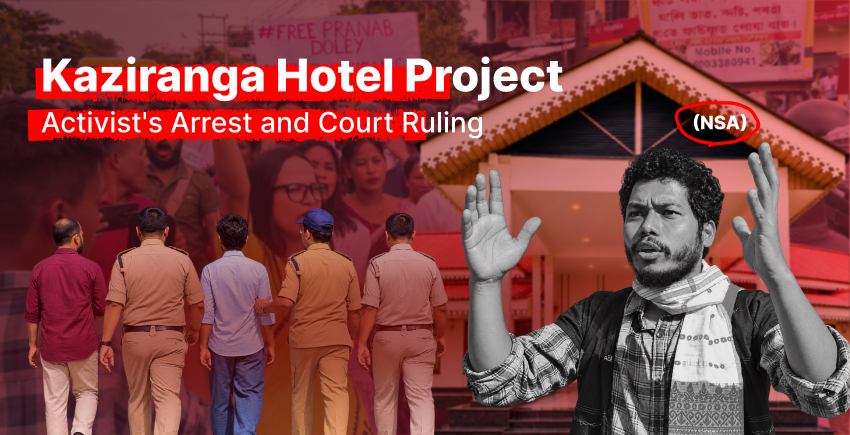
Kaziranga Hotel Project: Activist's Arrest and Court Ruling
The arrest of Pranab Doley, a 40-year-old land rights activist from Assam, brought attention to a proposed luxury hotel project near Kaziranga National Park. Doley opposed the project and raised concerns about the rights of indigenous residents. Golaghat Police arrested him on July 12, 2026. Although a local court granted him bail on July 29, 2026, the Assam government detained him under the National Security Act (NSA) on July 30, 2026. He remained in custody for more than 115 days until the Gauhati High Court cancelled his detention. The case brought attention to the government's use of preventive detention and the legal rights of people involved in public protests.
Why Was Pranab Doley Arrested?
Pranab Doley is the convenor of the Greater Kaziranga Land and Human Rights Committee. The committee works on issues related to the land rights of indigenous communities living near Kaziranga National Park. Doley became involved in the opposition to a proposed luxury hotel because residents were concerned about how the project could affect their land and homes.
The main concern among local families was the possible loss of land and changes to their existing way of life. Many residents depend on farming and other activities connected to their land for their income. They were worried that a large tourism project could affect their ability to continue these activities. They also wanted the authorities to consider the views of people living in the area before allowing the project to move forward.
The protests against the hotel project brought Doley into conflict with the local authorities. Golaghat Police arrested him on July 12 in connection with the protests. He later received bail from a local court on July 29, 2026. However, his release did not take place because the Assam government issued a detention order under the NSA on July 30, 2026.
The government claimed that Doley's activities were harmful to public order and state security. This decision meant that he continued to remain in custody despite receiving bail in the earlier case. The timing of the detention became an important part of the legal dispute because the government used a separate law immediately after the court granted him bail.
High Court Decision and NSA Controversy
The NSA (National Security Act) in India is a law related to preventive detention. According to the Act, the authorities are entitled to detain a person whenever they feel that the activities of this person may pose a threat to national security and public order. Unlike a usual criminal case, preventive detention does not require the conviction of a person on criminal charges. However, the procedure of such detention has to meet all the legal requirements stated in the Act.
The central legal issue in the case of Doley was the government's attempt to detain the individual after he received bail. He opposed the detention and questioned the imposition of harsh legislation upon those individuals who bring up public matters for discussion. He maintained that such harsh legislation should not be employed for the private gain of certain individuals.
Gauhati High Court reviewed the detention order & finally declared it void. As a result, Doley was freed from his imprisonment after remaining in prison for over 115 days. This was an important decision because the Gauhati High Court used its existing power of judicial review to examine the government's detention order and cancel it. The court checked whether the government had followed the required legal procedures and whether the detention order was legally valid.
Doley felt satisfied with the decision and termed it a triumph of the democratic forces. It was also clear from this decision that the role of the judiciary is not just confined to looking into the abuse of the power of the executive. It should also be noted that this decision only concerned the legality of his detention and not the future of his proposed hotel.
Impact on Local People and Kaziranga
Tourism is an important source of income for communities around Kaziranga National Park. Visitors create demand for accommodation, transport, food and local services. Hotels, restaurants, tourist guides & vehicle operators can all benefit from the growing number of visitors. Large tourism projects can also create employment opportunities for people living in nearby villages.
However, the expansion of tourism requires proper infrastructure. More hotels and visitors can increase the demand for clean water, electricity, roads, and waste disposal facilities. Without proper arrangements, this growth can create problems for nearby communities and put additional pressure on the local environment. These concerns are particularly important in a region known for its wildlife and natural resources.
The development of Kaziranga hotels should also consider the position of small local businesses. Independent hotel owners, local guides, transport providers, and food businesses need opportunities to participate in the tourism economy. If large developers receive most of the benefits, smaller businesses may find it difficult to compete. Local participation can help ensure that tourism income reaches more people in the region.
Doley also raised concerns about the police response to the protests. He alleged that additional police personnel were being brought in and that people were arrested during the night. According to him, these actions were intended to discourage residents from continuing their opposition to the project. These allegations brought further attention to the way protests were being handled by the local authorities.
He also expressed confidence in the younger generation. According to Doley, young people were becoming more willing to question decisions & speak about issues affecting their communities, even when they faced pressure or threats. Their participation can help bring local issues to public attention and encourage greater involvement in discussions about the region's future.
Democracy, Rights and Key Lessons
Constitutional rights in India, especially under Article 19 & Article 21, guarantee freedom of speech, peaceful assembly, and personal liberty. Authorities must always follow legal procedures when using preventive detention.
After his release, Doley shared that his time in custody was very hard. His family and supporters were worried and stayed with him. This situation showed that people can lose trust in the system when they feel treated unfairly. Strong government institutions and independent courts are needed to protect individual rights and ensure fair treatment for everyone.
For large tourism projects, public participation is very important. Authorities must share plans early, study social and environmental effects, and listen to local residents before making decisions.
The future of Kaziranga National Park and Kaziranga hotels needs a careful balance between environmental protection, business growth, and local community needs. Economic benefits should never harm the environment or people's legal rights. Long-term development requires responsible planning, public talks, & full respect for the law.

(0) Comments: